Wolf Cut Bangs: 7 Styles and How to Style Them
Wolf cut bangs explained: 7 fringe styles for straight, wavy, and curly hair, with styling tips, maintenance advice, and how to pick the right cut for you.
What if the fringe you copied from a photo was never cut for your curl pattern, your density, or the way your hair shrinks when it dries? That's where most wolf cut bangs go wrong. The layers can be right, the back can be right, and one blunt, disconnected fringe still turns a deliberate shag into an accidental mullet.
The fringe is the highest stakes part of this cut because it sits in your eyeline, connects the short crown to your face, and shows growth first. It also decides your daily work. A micro fringe demands precision. A curtain fringe forgives a late appointment. A curly fringe lives or dies on shrinkage.
Below are seven ways to wear it, treated as decisions rather than pictures. For each one you'll get how it behaves on waves, curls, and coils, how it grows out, and what to say in the chair so your stylist cuts the version you can realistically maintain.
1. Classic Wolf Cut Bangs

This is the signature shape. The fringe is shorter at the center of the forehead, longer toward the cheekbones, and finished with uneven, textured ends that melt into choppy crown layers. It's the front half of the modern hybrid described by Oprah Daily's wolf cut history as a mix of shag and mullet with short, choppy layers at the crown, longer lengths toward the back, and face framing or curtain style bangs.
That history matters in the chair. You're not asking for a blunt fringe plus long layers. You're asking for one connected silhouette where the bangs bridge the crown and the face frame.
How to Ask for It and Wear It
Say this: piecey, not blunt, with cheekbone level face framing and texture kept light at the top. If you're wavy or curly, ask for the fringe to be checked dry, or after your usual wash and style, so the length reflects how it sits.
- Define lightly: Work a pea sized amount of lightweight leave-in or curl cream through damp bangs. Heavy butter will collapse the separation you paid for.
- Diffuse low: Scrunch with a diffuser on low heat and stop while there's still movement. Overdrying turns piecey into puffy.
- Use case: A 2B to 3A wearer who air dries most days gets the most from this version, because natural bend does half the styling.
Start the center a touch longer than your reference photo. You can go shorter in the same appointment. You can't add length back.
2. Curtain Wolf Cut Bangs
Curtain bangs are the lower commitment entry point. The fringe parts in the center and sweeps to both sides, blending into longer face layers instead of sitting straight across your forehead. You keep the wolf cut's crown texture without the hard line of a classic fringe.
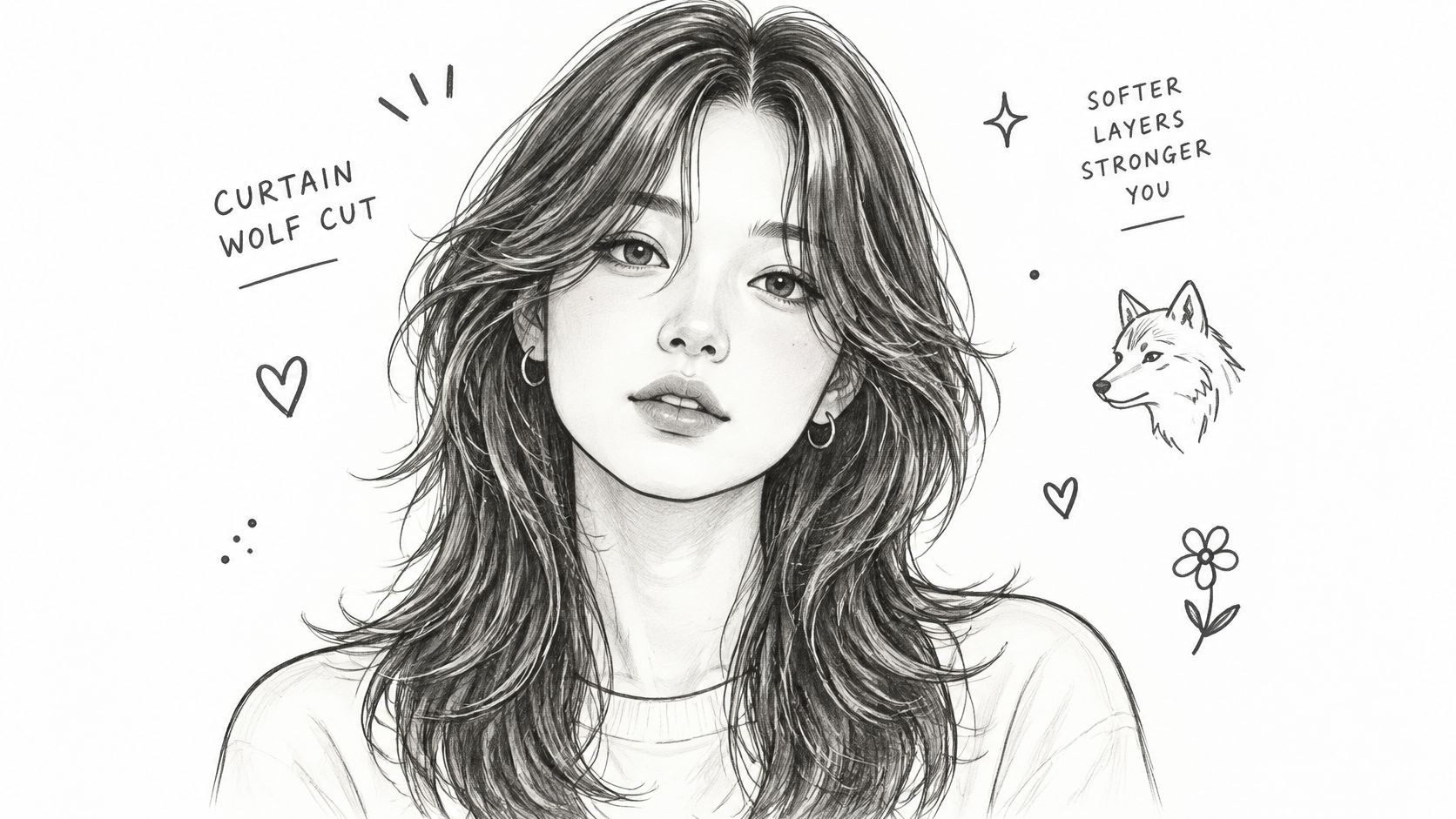
I recommend this first if you're fringe nervous, wear glasses, or push your hair back for work. Curtains can be tucked, pinned, or swept into the sides as they grow, which no other version here does as gracefully.
Cutting and Daily Setting
Ask your stylist to cut the curtains slightly longer than you think you want. On wavy and curly hair, they'll spring up once dry, and that extra length buys you weeks of grow out before they poke your eyes.
For styling, set the part while the hair's damp. Smooth a light gel or mousse over each side, direct the pieces away from your face, then don't touch them while they dry. Touching breaks the sweep and invites frizz at the exact spot people see first.
- Daily refresh: Mist only the fringe, re-establish the part with a fingertip, and pinch the ends back into place.
- Humidity note: Log how the curtains respond on damp days. If they consistently collapse inward, you need more hold, not more cutting.
- Use case: Say you love the 2022 shaggy photos but need a ponytail for nursing shifts. Curtains give you the face frame on days off and disappear on workdays.
3. Wispy Wolf Cut Bangs
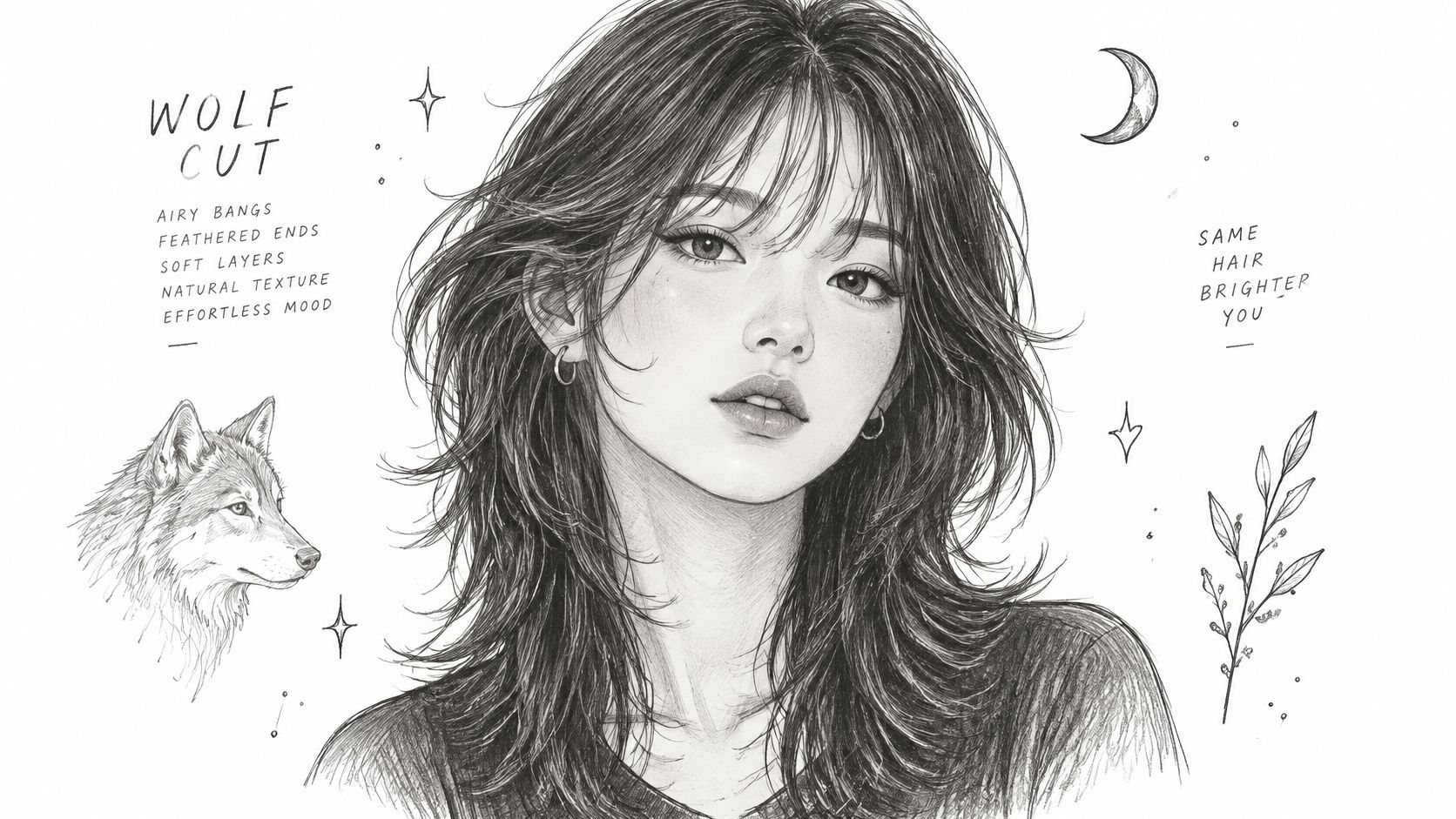
Wispy bangs trade chunk for air. The ends are fine, feathered, and slightly see through, sitting close to the forehead and feathering into the layered crown. On straight and wavy hair this reads soft. On curly hair it's the version most likely to be ruined by the wrong tool.
Thinning shears are the problem. They shred a curl clump into short and long pieces, and those short pieces stand up as frizz while the long ones hang in gaps. You end up wispy and patchy.
The Tool Conversation to Have First
Request point cutting rather than thinning shears if you've got any curl at all. Point cutting removes weight at the very ends while keeping each clump intact, so the fringe stays feathery without losing its pattern. If your waves are loose, pair this with a routine built for them, like this 2A wavy hair routine, because products that are too rich will glue wispy ends into strings.
- Finish dry: After drying, smooth one drop of light serum over the ends only. Serum at the root makes a fine fringe look greasy by noon.
- Trim small: This shape needs tiny, frequent dustings rather than a big reshape. A few millimeters preserves the airiness.
- Track the weather effect: Note frizz changes over time. If humidity doubles the volume, your fringe was cut too dense for a wispy brief.
- Use case: Dense 3B hair that forms one solid shelf across the forehead benefits most, because point cut ends let curls separate instead of clumping.
4. Side-Swept Wolf Cut Bangs
A side swept fringe is built on asymmetry. One side carries longer, sweeping length, the other side stops shorter and choppier near the brow, and the whole front moves in one direction. It reads edgier than a symmetrical fringe and it flatters faces that look wider with a center part.
The trade off is honesty about your natural part. If your hair has grown toward the left for a decade, a rightward sweep will fight you every morning, no matter how well it's cut.
Making the Sweep Stay Where You Put It
Have the fringe cut dry, in the direction you'll wear it, with your curl pattern visible. Your stylist needs to see which clumps cross your forehead cleanly and which ones spring straight out, because those need to be left longer or moved into the face frame.
- Set after diffusing: Once the fringe is dry and in place, mist a light hold spray from arm's length. Spraying damp hair and then diffusing just redistributes it.
- Protect it overnight: Sleep on a satin pillowcase, or gather the lengths in a loose braid and leave the fringe smoothed to its side. Cotton friction flattens one side and lifts the other.
- Test both sides first: Before the appointment, wear your current hair swept each way for a full day. Note which side holds with your density and which side exposes a sparse temple.
- Use case: Wavy hair with defined clumps and a strong side part gets editorial movement here with almost no daily heat, because the cut follows existing growth.
5. Textured Micro Wolf Cut Bangs
Micro bangs sit at or just above the brows, heavily point cut, with a hard contrast against the longer layered back. This is a statement on purpose. It's also the least forgiving option on this list, and I won't pretend otherwise.
Short fringes show growth in your eyeline first, which is why Salon 1150's wolf cut maintenance guide puts the refresh for an intentionally short fringe at approximately every 3 to 4 weeks. Miss that window and a micro fringe doesn't look grown out. It looks accidental.
Who Should Skip It for Now
If your curls shrink dramatically, cut this fringe dry, always. A wet measurement above the brow can dry a full curl higher, and there's no styling trick that recovers that length. Start at brow level, let it dry completely, then decide together whether to go shorter.
Humidity will also rewrite this fringe daily, so it's worth understanding why curly hair gets frizzy before you commit to the shortest option.
- Define the ends: Warm a fingertip of pomade or texturizing paste and pinch individual pieces. Raking product through makes a micro fringe look separated and thin.
- Plan the exit: Grow out works best by letting the center lengthen into classic bangs while keeping the sides blended, rather than stopping trims entirely.
- Use case: Straight to 2C hair with a wearer who already books monthly appointments carries this best. Occasional salon visitors should choose longer.
6. Curly Wolf Cut Bangs
Here's a look at how cutting approach changes where a curly fringe lands once it dries.
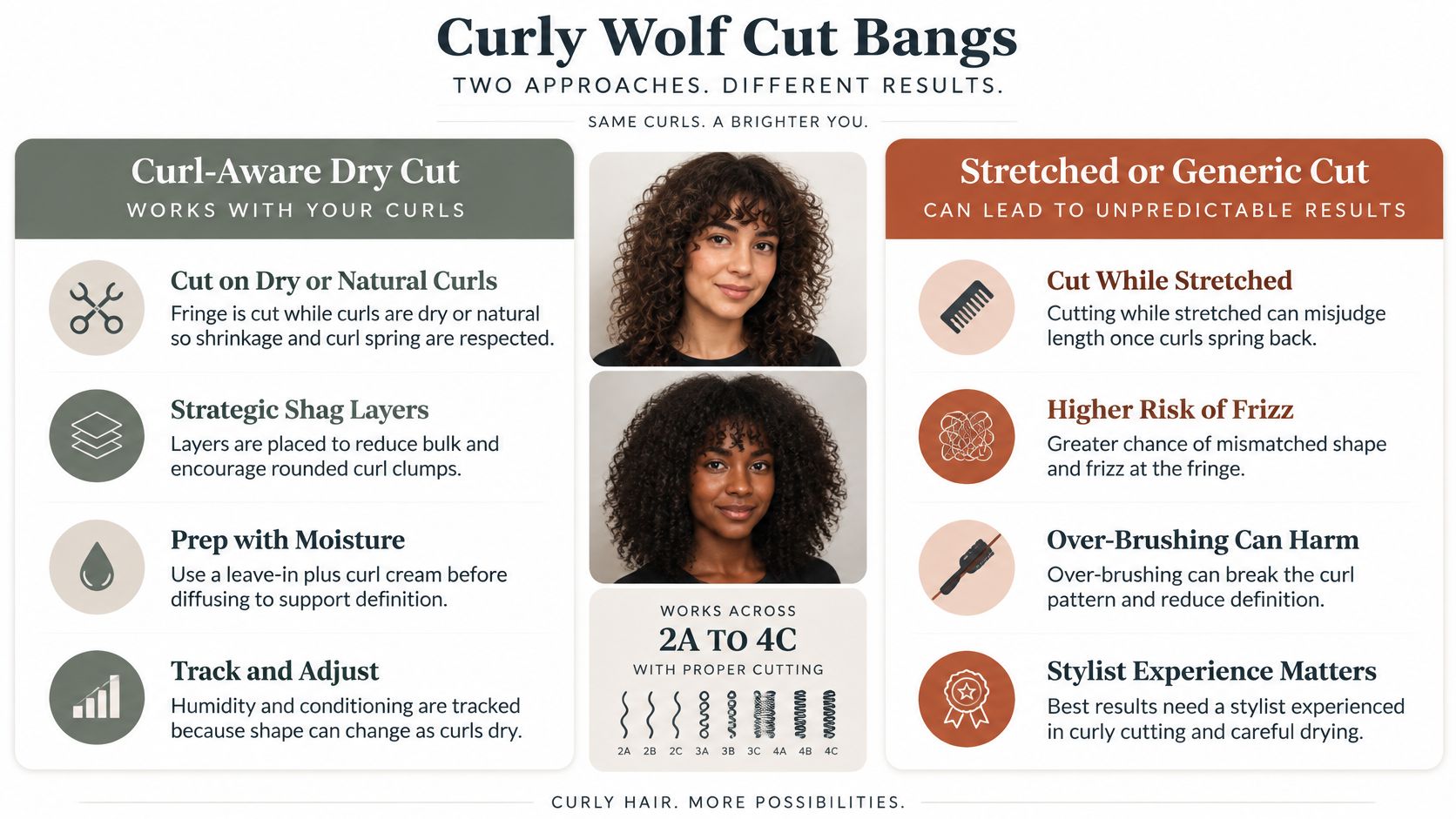
This version is designed around the pattern instead of despite it. The fringe and shag layers are shaped dry, bulk comes out of the sides, and the silhouette rounds out so curls can spring up rather than hang in a triangle. Coverage from Byrdie's curly wolf cut guide stresses shaping curly bangs around natural texture while preserving enough weight through the bottom so the cut doesn't turn stringy.
That bottom weight is the detail people miss. Take too much from the perimeter and your 3C or 4A fringe looks full while the ends below it look tired and sparse.
Booking and Styling for Shrinkage
Book a curly hair specialist and arrive with your hair dry, styled how you normally wear it, with no heavy stretching. Bring a photo showing your stretched and unstretched fringe length if you've had bangs before. That one reference prevents most shrinkage arguments.
Watch how a dry shaped fringe is styled and diffused before you try to replicate it at home.
At home, apply leave-in and curl cream to the fringe while it's soaking wet, then diffuse without brushing. The techniques in this guide to defining curls apply to the fringe exactly as they do to the rest of your head, just with less product.
Practical rule: Judge a curly fringe only when it's fully dry and you've broken any product cast. Every earlier verdict is based on a length that won't exist in an hour.
7. Long Wolf Cut Bangs (Eyebrow-Length Fringe)
Long bangs fall at or below the eyebrows and blend into the face layers. You get wolf cut texture and crown lift with the softest profile of any option here, plus the easiest relationship with grow out.
This is the version I steer people toward when they're growing out a shorter fringe they regret, or when they want to test forehead coverage before committing. Nothing about it traps you.
Keeping Length Without Losing Shape
The technical target is clear in Allure's wolf cut guidance, where hairstylist Russell recommends a piecey rather than blunt fringe and razor cutting to keep internal texture light, with the longest layer on medium versions falling between the shoulders and chest while the shortest can reach the bang line. That shortest to longest relationship is what stops a long fringe from looking like uncut hair in front of layered hair.
- Trim the eyeline only: Ask for the center dusted before it reaches your lashes, and leave the sides to keep blending. Cutting everything equally creates a shelf.
- Diffuse the fringe separately: Give it thirty seconds of directed air after the rest is dry. A long fringe left damp against your forehead frizzes first.
- Rotate your part: Try center, off center, and side over one week. Long bangs are long enough to become curtains, which tells you your next cut.
- Use case: Mid length 3A hair growing out a micro fringe can sit here comfortably for months, because each trim just refines the blend instead of restarting the shape.
Log the fringe length at each appointment. You'll learn your real growth pace, and booking stops being guesswork.
Wolf Cut Bangs Styles at a Glance
| Style | Fringe Length | Maintenance | Best For |
|---|---|---|---|
| Classic Wolf Cut Bangs | Short at the brow, longer toward the cheekbones | Low daily styling; trim every 6–8 weeks | Fine or flat hair; wavy and curly textures |
| Curtain Wolf Cut Bangs | At or below the brows | Regular styling to keep the sweep defined | Oval or heart-shaped faces; a softer, easy-to-grow-out fringe |
| Wispy Wolf Cut Bangs | Above or at the brows | Minimal product; small trims every few weeks | Dense hair; a light, understated look |
| Side-Swept Wolf Cut Bangs | Asymmetrical, with longer swept-side lengths | Consistent styling and precise trims | A dynamic look; balancing a rounded face or uneven features |
| Textured Micro Wolf Cut Bangs | At or just above the brows | Frequent trims, often every 3–4 weeks | A bold statement; highlighting the eyes |
| Curly Wolf Cut Bangs | Short, springing up at the forehead or above the brows | Curl-focused moisture and styling; dry cutting recommended | Curly and coily hair across a range of curl types |
| Long Wolf Cut Bangs (Eyebrow-Length Fringe) | At or below the eyebrows | Regular trims to keep hair out of the eyes | Low-commitment styling; versatile wear and gradual grow-out |
Choosing Your Fringe and Keeping It Sharp
Choose by texture first, photo second. Write down your curl pattern, how much length you lose from wet to dry, and whether your fringe area is as dense as your crown. A style that needs dense, straight-across coverage won't behave on a sparse, high shrinkage hairline, and no product fixes a mismatch that fundamental.
Then match length to that shrinkage. If your hair springs up significantly, start longer and adjust in small steps across one appointment, checking the dry endpoint each time. If you routinely stretch your hair, tell your stylist, because a fringe cut for stretched wear and a fringe cut for natural wear are different haircuts.
Commit to a Cadence You Will Actually Keep
Be honest about salon frequency before you pick a length. Short, precise fringes need attention in roughly three to four weeks, while longer curtain and eyebrow length versions can stretch toward six to eight weeks between reshaping. When the eyeline goes but the rest of the cut still works, book a bang trim only. Removing length everywhere just because the front grew wastes the grow out you've earned.
Track it easily. Take a front photo after the cut, then repeat at a few set intervals in similar light and hair state. Check whether the fringe still parts cleanly, whether crown lift is visible, and whether the face frame still blends into the ends. For curls, note shrinkage, frizz, definition, and moisture separately, because they change at different rates.
Build a Moisture First Fringe Routine
Your fringe needs less product than your lengths, applied earlier, while it's wettest. Leave-in first, then a small amount of cream or gel for hold, then hands off while it dries. Refresh with water before you reach for more product, since layering cream on a dry fringe builds weight exactly where you want lift.
For curly and coily readers, Coil at https://coilapp.site can support that routine between visits. We support wavy, curly, and coily hair from 2A to 4C at any length, our scan reads frizz, definition, and moisture from a selfie you add at check-in, and you can correct anything the scan gets wrong.
The right fringe is the one your texture can maintain on a normal Tuesday, not the one that photographs best on appointment day.
Your fringe will tell you within weeks whether the cut, the products, and the trim timing fit your hair, so track it instead of guessing. Coil builds an adaptive routine for your curl pattern, reads definition, frizz, and moisture from your check-in selfie, and reminds you when a refresh is due. Visit us, set up your profile, and keep your wolf cut bangs sitting where you cut them.