Chamomile for Hair Lightening: What Really Works
Chamomile for hair lightening works best on fair hair. Learn realistic results by shade, safe methods and a strand test before you start.

Can a cup of tea from the kitchen lighten your hair? Chamomile for hair lightening can add a soft golden brightness, mainly on fair and light blonde shades, while dark brown and black hair usually show little visible lift. Match your starting shade in the table below before you decide a rinse is worth the time.
The key distinction is surface brightening versus true bleaching. Chamomile can leave a warm, yellow-gold tone on the outside of the strand; peroxide lightens by oxidizing melanin inside it. The plant has a long history of cosmetic and dye use, which fits gradual toning better than the even lift of an oxidative salon bleach.
There is no universal recipe. Starting color, rinse strength, how often you repeat it, how long it sits, porosity, and curl pattern all change how evenly the warmth deposits and how quickly it shows. Read your row first, then choose the weakest routine that still matches your goal.
Expected Chamomile Results by Natural Hair Color
On fair and pale blonde hair, chamomile can look like brighter highlights with a golden cast. On light brown it is a softer warm glow. On medium brown, dark brown, or black hair, don't expect a real shade lift.
The effect is a surface-color phenomenon, not chemical bleaching. The yellow flavonoid apigenin can sit on the cuticle and add yellow-gold reflectance. It doesn't oxidize the melanin inside the strand the way peroxide does. A Cosmetic Ingredient Review dossier reports that fresh chamomile extracts contained approximately 3.0 ± 0.4 mg/g dry weight of apigenin-7-glucoside, with significantly lower values in some dried samples. "Chamomile" isn't one uniform active, so two teas can behave differently.
| Starting hair color | Likely visible effect | How noticeable |
|---|---|---|
| Fair or pale blonde | Golden-yellow warmth and brighter highlights | Most visible |
| Light brown | Subtle warm glow and soft brightening | Visible after repeated use |
| Medium brown | Faint warm cast with little lift | Hard to judge without a strand test |
| Dark brown or black | Little apparent lightening, possible brassiness | Rarely noticeable |
| Previously colored or chemically treated | Unpredictable warm deposit, may be uneven | Test a hidden strand first |
One rinse rarely shows much. Warmth builds across several uses over weeks, and it still depends on extract strength, contact time, porosity, existing color, and light. These rows are general expectations, not a promised number of levels. Evidence here is cosmetic and traditional, not a set of controlled trials.
How to read your own hair
Stand in natural daylight and place your hair in one row before you try anything. Indoor bulbs and phone photos can turn a warm cast into something that looks like lightening. Color-treated hair is the least predictable case, because leftover dye can grab the warm pigment in patches. If your cuticle is tight, a low porosity hair routine is the better frame for any surface tint, since that hair takes up deposits slowly and unevenly.
Why Chamomile Brightens Instead of Bleaching
Think of chamomile as a sheer golden filter laid over the hair, not a stripper that pulls color out of the shaft.
Apigenin, the main yellow pigment, sits on and around the cuticle and adds warm reflectance. The hair looks brighter and warmer. The color underneath barely moves. Dermatology writing describes a dull yellow hue on fair hair, and hair-dye reviews place Matricaria recutita among plants long used to dye hair yellow, as the Indian Journal of Dermatology, Venereology and Leprology notes. That is pigment deposit and optical brightening, not strong melanin removal.
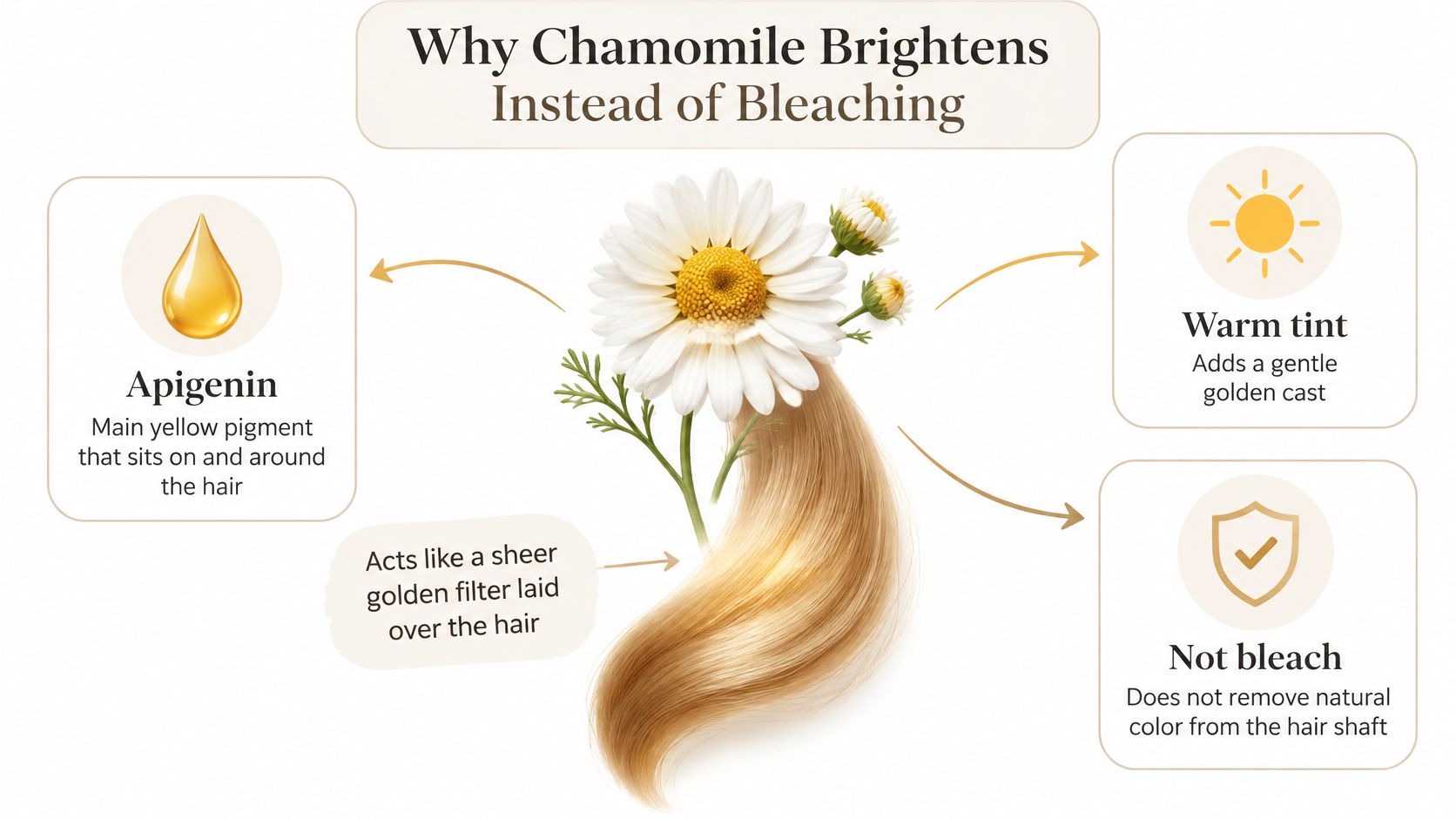
Peroxide bleach works the other way. It opens the cuticle and oxidizes melanin inside the cortex, which is why a salon lightener can jump several levels in one sitting. Plant colorants also fade, shift with pH, and stay inside a narrow shade range.
Surface deposit versus a real lift
- Where it acts: chamomile stays on the cuticle. Bleach changes pigment inside the strand.
- What you see: chamomile adds shine and a warm cast. Bleach removes depth.
- How long it lasts: the golden film washes out. Oxidative lift stays until the hair grows out.
Because the pigment is on the surface, room light changes the look. A photo under a warm lamp can look lighter than the same hair in daylight. One rinse is a test, not a result. Aim for warmth and shine, not a new shade.
Practical rule: If you wanted several levels of blonde, chamomile isn't the tool. If you wanted a little more gold on hair that is already light, it can be.
Safety Checks and Mistakes to Avoid
The bigger risk isn't a weak result. It's allergy, plus the extra dryness from lemon-and-sun recipes that get stapled onto a gentle tea.
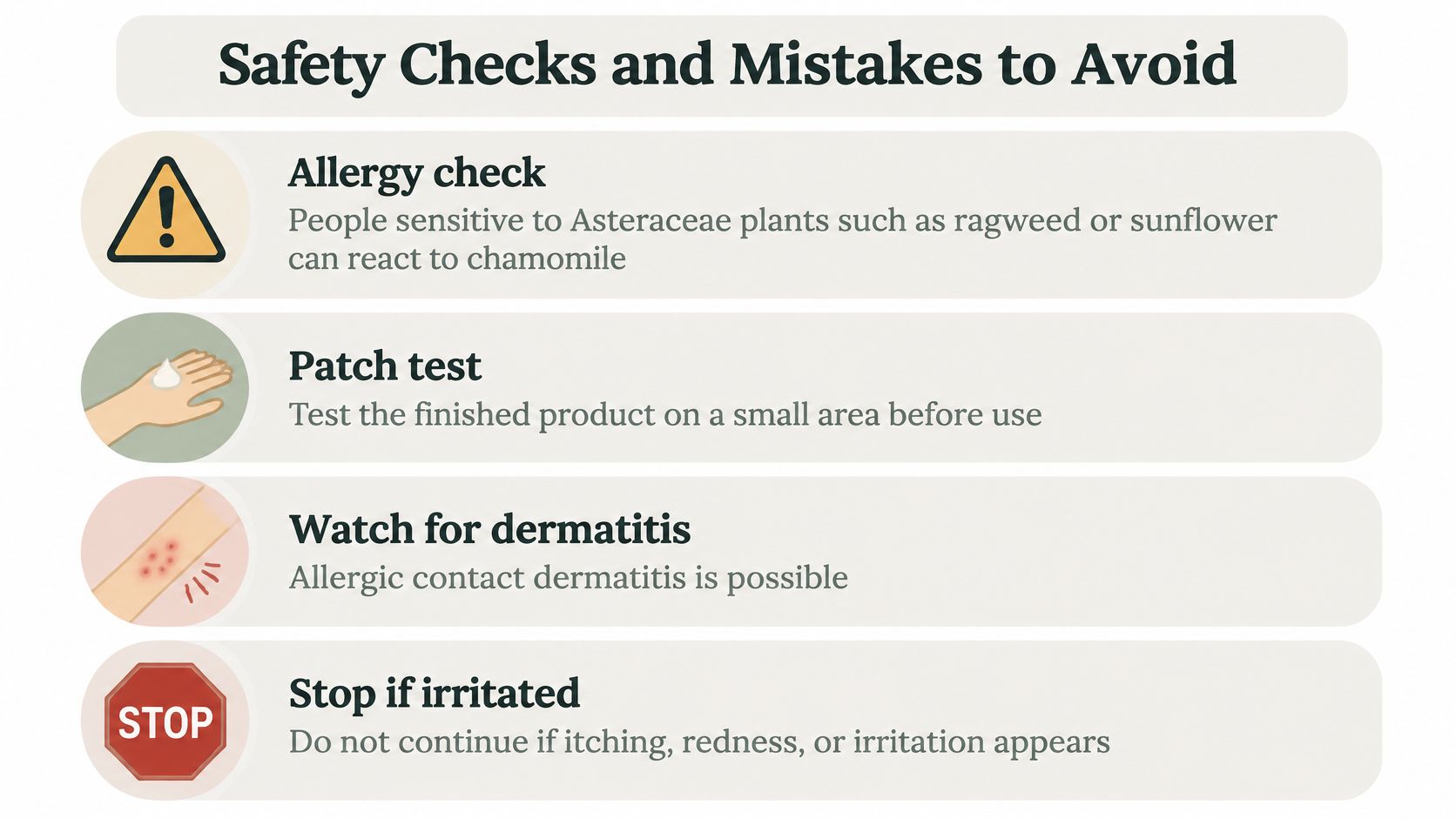
People allergic to Asteraceae plants such as ragweed or sunflower can react to chamomile. Hypersensitivity has been reported, and allergic contact dermatitis is possible. The Merck Manual is clear that clinical evidence for chamomile uses overall remains limited, and it doesn't set a reliable dose, frequency, or shade change for home treatments. The Cosmetic Ingredient Review treats chamomile ingredients in hair dyes and colors with caution statements and patch-testing requirements. Patch-test the finished product, not the plant name on the jar.
Extracts and water rinses aren't the same as chamomile essential oil. Concentrated oil carries a higher sensitization risk. In one assessment, photoaggravation occurred in 1 of 5 patients tested with a 2.5% chamomile ether extract, according to the Cosmetic Ingredient Review draft report. Don't pair a concentrated preparation with deliberate sun. The same review considers chamomile-derived cosmetic ingredients safe under current use when they are formulated to be non-sensitizing.
What lemon and sun add
Lemon juice and long sun time are a separate problem from the flower. Acid plus ultraviolet light can raise dryness and roughness, especially on porous curly or coily hair. A medical reference warns that the tea-and-lemon approach can dry hair and recommends conditioning afterward. Sunlight isn't required for a surface tint. Drop the lemon by default.
| Symptom | Likely cause | Fix |
|---|---|---|
| Hair feels dry or rough after rinsing | Acidic lemon, UV exposure, and repeated wetting | Drop the lemon, limit sun, and condition after every rinse |
| Patchy or streaky color | Uneven uptake on porous or damaged areas | Strand test first, apply evenly, avoid repeat sessions on the same area |
| Brassy or orange cast on darker hair | Warm pigment deposit on a darker base | Stop using chamomile and consult a colorist for correction |
| Hair dries out after several sessions | Frequent wetting, friction, and sun | Space out sessions and add a moisturizing treatment |
| Redness, itching, or swelling | Allergic reaction to Asteraceae plant compounds | Rinse off, stop use, and see a doctor if symptoms are severe |
Itching, swelling, burning, or scalp irritation means rinse off and stop. If you were hoping for painted-in dimension instead of a tea rinse, balayage at home is a different project, with its own strand tests and developer risks. This is general information, not medical advice. Persistent scalp trouble or hair loss should be checked by a dermatologist.
How to Apply a Chamomile Rinse Step by Step
A careful rinse is a short experiment, not a color appointment. Each step exists so you can stop early if the hair or the skin objects.
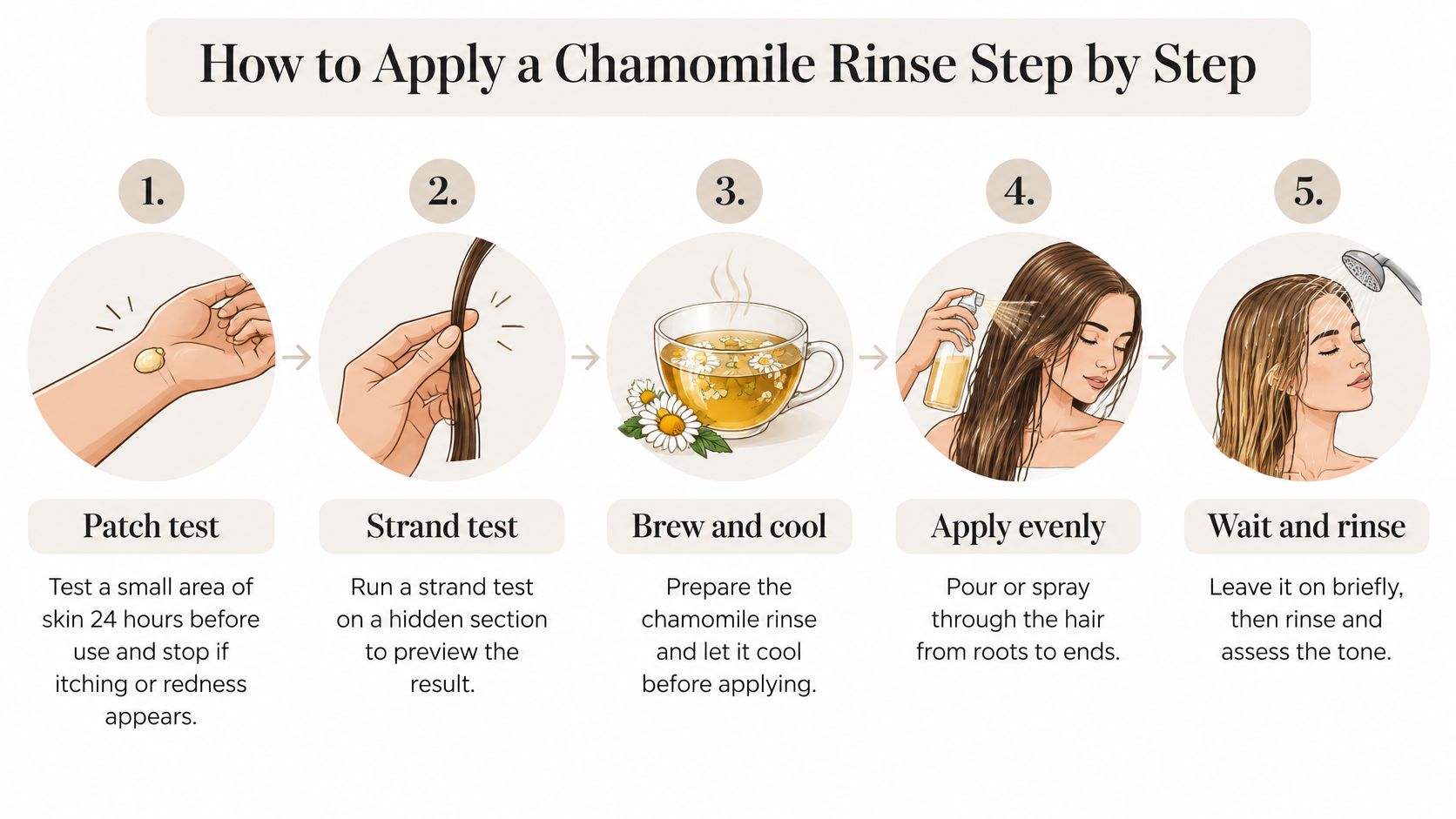
- Patch-test the skin. Dab the cooled liquid on a small patch of inner arm or behind the ear 24 hours ahead. Itching or redness means you don't put it on your scalp.
- Strand-test a hidden section. Pick hair at the nape, note the color in daylight, and only then choose a sitting time. That preview is your dose.
- Brew and cool. Steep a strong infusion of dried chamomile flowers, or dilute a plant extract in water, strain it, and wait until it is lukewarm. Hot liquid on a wet scalp is uncomfortable and unnecessary.
- Apply on clean, towel-dried hair. Work from roots to ends so the film is even. Keep it out of your eyes. A spray bottle helps on long hair. Hands work better on short cuts.
- Cover and wait. A shower cap holds heat without baking the hair in the sun. Use the time your strand test already tolerated, not a longer guess from a blog.
- Rinse cool and condition. Cool water helps the cuticle lie flatter. Condition afterward, because repeated wetting alone can leave hair rougher even when the flower is mild.
- Photograph, then wait. Shoot in the same window light each time. Repeat only as often as the strand test suggested. A successful session looks like a faint warm shine, not a sudden blonde.
If brewing feels fiddly, a finished mist is an option. In 2025, Allure reported that Klorane Brightening Sun Lightening Spray, a chamomile-containing product, was priced at $21. Read that label the same way you read a tea: patch-test it, and don't treat the word "brightening" as a promise of lift.
Skip any step that adds lemon, vinegar, or a long sit in direct sun. Those extras change the risk more than they change the color.
Adjusting the Method for Curly and Coily Hair
Curl pattern and porosity change both the risk and the look. The flower doesn't behave differently. The hair it's landing on does.
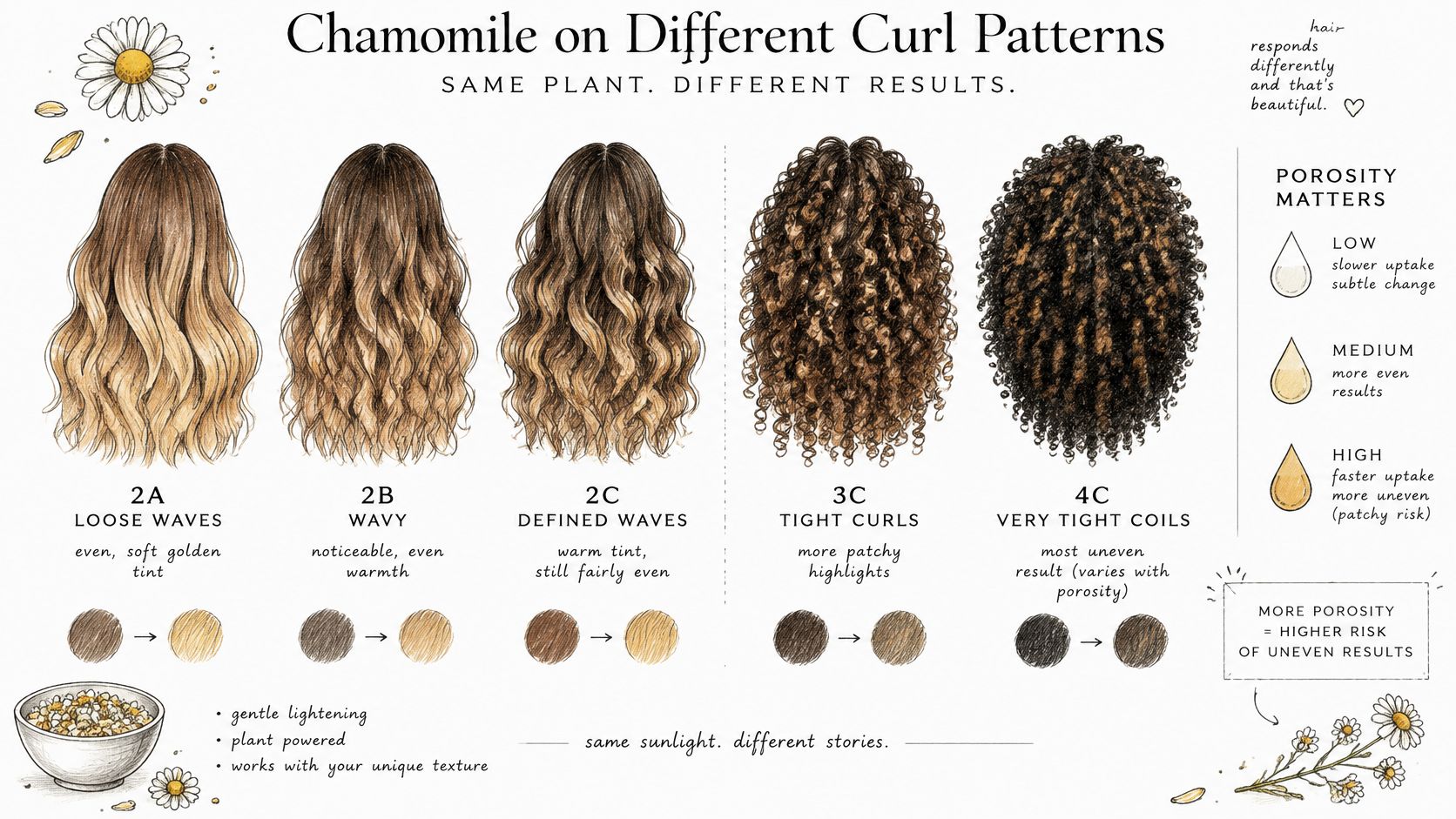
Wavy hair, 2A to 2C, usually takes a warm cast more evenly, because the cuticle is often less raised and the strand is easier to coat in one pass. Curly 3A to 3B hair can look brighter on the ends, where wear has already lifted the cuticle, and quieter at the roots.
Tighter curls, 3C through 4C, are where patchiness shows up. High-porosity coils can grab surface pigment in some bends and miss others. Available writing doesn't give controlled numbers for that unevenness, so treat it as a reason to test, not as a forecast. Dense hair needs a longer strand test so the liquid reaches the section you're judging. Fine hair can show warmth sooner, so shorten the sit.
What to change in the mix
Prefer a water-based rinse or a conditioner-compatible formula over an alcohol-rich spray or essential oil. Repeated wetting, friction, and sun dry curls even when the botanical isn't a peroxide. Test one section at the back, then compare it with the rest after several uses under the same daylight.
We build a routine from curl type, porosity, density, and scalp, which is the right set of inputs for this kind of adjustment. If the rinse leaves clumps fuzzy, go back to how you define curls before you add another round of pigment.
Watch one application on hair close to your own pattern, then copy the evenness, not the sitting time.
Decide If Chamomile Is Worth Trying on Your Hair
Fair or light blonde hair in good condition is a reasonable candidate for a gentle, repeated rinse. Light brown hair can try it if a soft glow is enough. Dark brown or black hair, chemically treated hair, and very fragile curls are poor candidates. The likely outcome is little change, a brassy film, or extra dryness.
Color-treated, high-porosity, or fragile curls should skip the rinse, or run a hidden-strand test across several weeks before it touches the whole head. Deliberate sun time isn't needed and adds risk, so leave it out.
Judge after several consistent uses, not after one Saturday. Track warmth, dryness, frizz, and curl definition as separate notes. A brighter photo under a warm lamp isn't proof the melanin moved. Nothing in the evidence fixes a reliable dose, a set frequency, or a shade count, so the result stays personal.
The daily check-in is a simple way to keep that record: tick off what you did, rate how your curls feel, and add a selfie if you want one. The AI hair scan reads frizz, definition, and moisture from that selfie, which keeps a warm cast from being mistaken for healthier hair.
This week, run the strand test on a hidden section and let that patch decide.
Coil builds an adaptive routine for wavy, curly, and coily hair from your curl type, porosity, density, and scalp, then updates it from a short daily check-in. If you're testing a chamomile rinse, that record keeps warmth, frizz, and moisture from blurring together. Start with Coil and see whether the strand is changing.