
Men's Curly Hair Routine That Fits a Busy Week
Build a men's curly hair routine for short curls, fades and grow-outs: wash schedule, product steps and fixes for frizz and dryness in under 20 minutes.
You've got a fade that looks sharp after the barber, but by midweek the curls on top are dry, your scalp feels oily, and the product you bought for long curls leaves your short cut flat. The fix usually isn't a more complicated routine. It's matching wash days and product amounts to your cut, your scalp, and what your week involves.
Curl shape is formed as the hair grows, so washing won't change your pattern. A useful men's curly hair routine works with that structure to manage definition, moisture, and scalp comfort.
Your Weekly Curly Routine by Cut Length
A fade and a longer grow-out can share the same curl pattern and still need opposite routines. Length decides how much product curls can carry, and scalp condition decides how often you wash. The table below sets a starting point for both.
| Cut | Wash frequency | Leave-in or cream | Drying method |
|---|---|---|---|
| Fade or cut under 3 cm | 2–3 times a week | Light leave-in on the ends | Blot with a cotton T-shirt, then air-dry or diffuse on low |
| Short curls, 3–8 cm | 1–2 times a week | Leave-in over the whole head | Scrunch with cream, then air-dry |
| Grow-out, 8 cm and longer | Once a week, with scalp-focused shampoo as needed | Leave-in plus a gel or cream | Scrunch and diffuse on low |
| Any cut with heavy styler or regular sweat | Add a scalp cleanse when buildup shows | Refresh with water and a small amount of leave-in | Air-dry |
These bands are working ranges, not fixed schedules. The structure of the hair fiber stays constant, but how your curls look day to day shifts with moisture, product weight, friction, and handling, as described in this review of hair-shaft biomechanics. The right wash day is the one your scalp asks for, not the one a calendar assigns.
Start with the row closest to your cut, then adjust for what your week involves. A fade under 3 cm takes only a fingertip of leave-in; more than that and the short lengths collapse flat. A grow-out drinks more product, and the extra length gives curls more chances to tangle and dry out, so careful scrunching and low-heat diffusing earn their time. Sweat and heavy styler override everything. If you train most days, add a scalp cleanse after sessions even when the table says your curls could wait.
Use the table as a starting point, not a rulebook. Thick curly hair can usually go longer between washes than you expect. An oily, itchy, or flaky scalp is the signal to cleanse sooner, whatever the interval says.
Run a day-two check before reaching for more product. If curls feel dry or look frizzy, work in a small amount of leave-in or shorten the gap between washes. If the scalp itches or the curls look coated and flat, cleanse sooner and cut the styler back. For shorter cuts especially, the styler matters as much as the amount: compare curl cream and gel, then keep whichever gives your length definition without weighing it down.
How to Wash and Condition Curls Step by Step
A good wash day cleans the scalp without roughing up the curls. Men with wavy, curly, or coily hair can use a scalp-first wash, condition the full length, and detangle while the hair is slippery with conditioner. That sequence limits friction on curls that are especially vulnerable to dryness and breakage, according to the American Academy of Dermatology's curly-hair guidance.
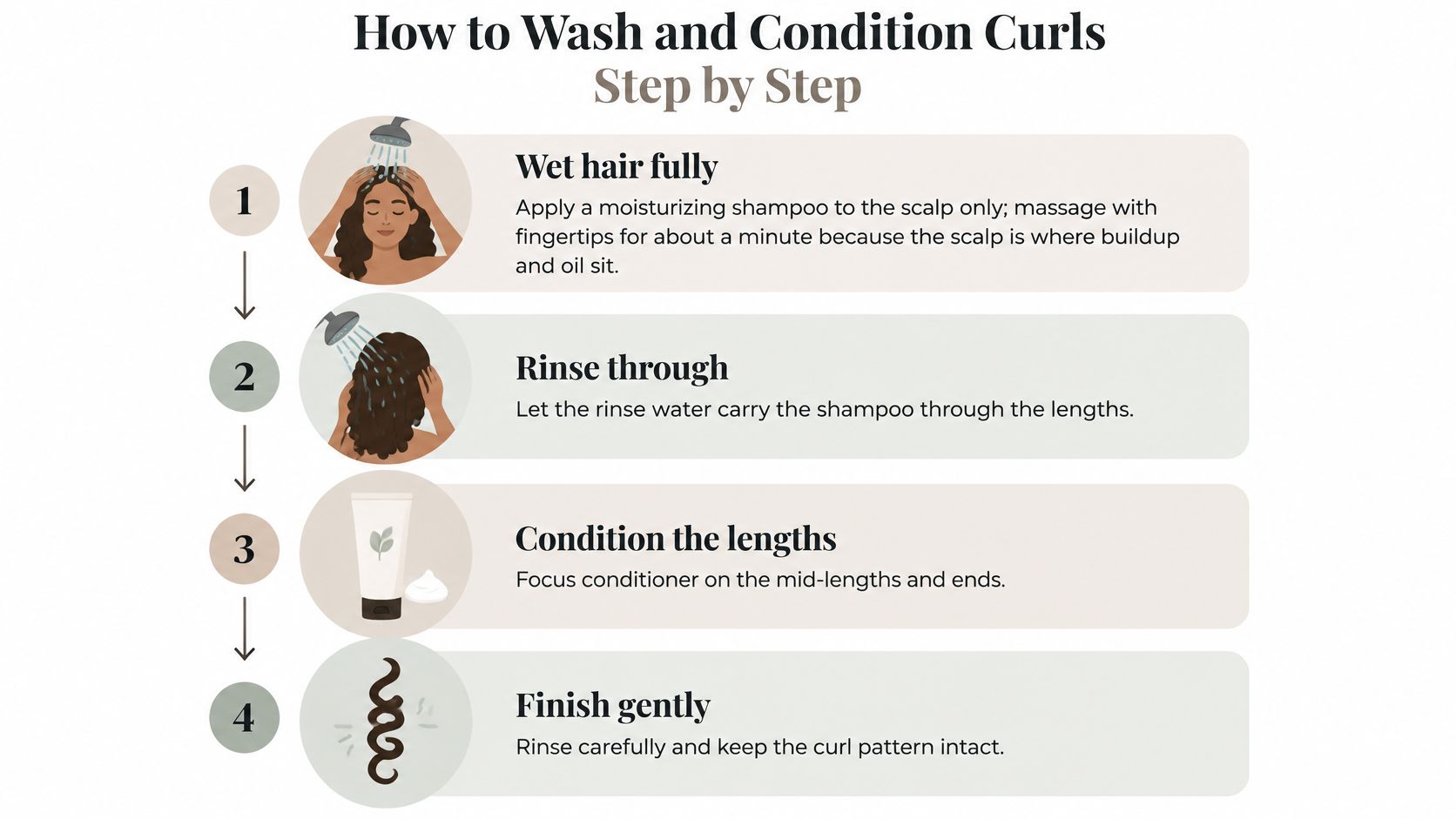
Wet hair fully. Use a moisturizing shampoo and massage it into the scalp with your fingertips for about a minute. The scalp is where oil and product buildup collect, so concentrate the cleansing there rather than scrubbing every curl.
Rinse through. Let the water carry shampoo down the lengths. Raking or scrubbing the hair itself adds friction and can leave curls more tangled.
Condition the lengths. Spread conditioner over the entire length, not only the ends, and leave it in for a few minutes to add slip. Detangle while the hair is soaked with conditioner, starting at the ends and working upward with your fingers or a wide-tooth comb.
Rinse gently. Rinse the conditioner carefully so hair feels soft and slippery rather than coated. A cooler rinse can help the hair feel smoother, but it won't change the curl pattern.
Blot, don't rub. Squeeze out water with a cotton T-shirt instead of roughing up curls with a towel. Never dry-brush curly hair; detangle in the shower while it's conditioned.
Style while damp. Scrunch in leave-in conditioner or a few drops of oil, then air-dry or diffuse on low. On a fade, start with about a dime-sized amount of leave-in and add only if the hair still feels dry, since too much can make short curls look greasy.
A good wash day ends with soft, separated curls that hold their shape when dry. They shouldn't feel coated, stiff, or surrounded by a haze of frizz.
When to Wash More or Less Often
Set wash frequency by scalp condition and activity, not by the calendar. A recent clinical review suggests that men with tightly textured hair may benefit from moisturizing shampooing 2–3 times a week, while other textured-hair users may wash weekly or every two weeks. Another review reports that weekly washing with suitable products can help regulate the scalp microenvironment and reduce buildup associated with breakage. The clinical review on wash frequency for textured hair describes a range of approaches rather than one schedule for everyone.
Use this trigger table to make one adjustment at a time:
| Signal this week | Change to make |
|---|---|
| Sweat after workouts or outdoor activity | Add a scalp cleanse after the sweat-heavy day |
| Heavy cream, gel, or several styling layers | Cleanse the scalp when the hair starts to feel coated |
| Short cut that shows oil quickly | Wash sooner when the scalp looks or feels oily |
| Dry scalp with tight, brittle curls | Space out shampooing and condition every wash |
The aim is to keep your scalp comfortable without stripping moisture from the lengths. If you use a strong hold product regularly, buildup may call for a scalp cleanse even when the curls themselves still look defined. For more help deciding what oily roots are telling you, see this oily-hair routine guide.
Keep a two-week log of wash days, workouts, products, and how your scalp and curls feel. Coil's daily check-in lets you tick off what you did, rate how your curls feel, and optionally add a selfie. Hair advice on the site is general information, not medical advice; persistent scalp or hair-loss problems should be checked by a dermatologist.
Fades, Short Cuts and Grow-Outs Need Different Care
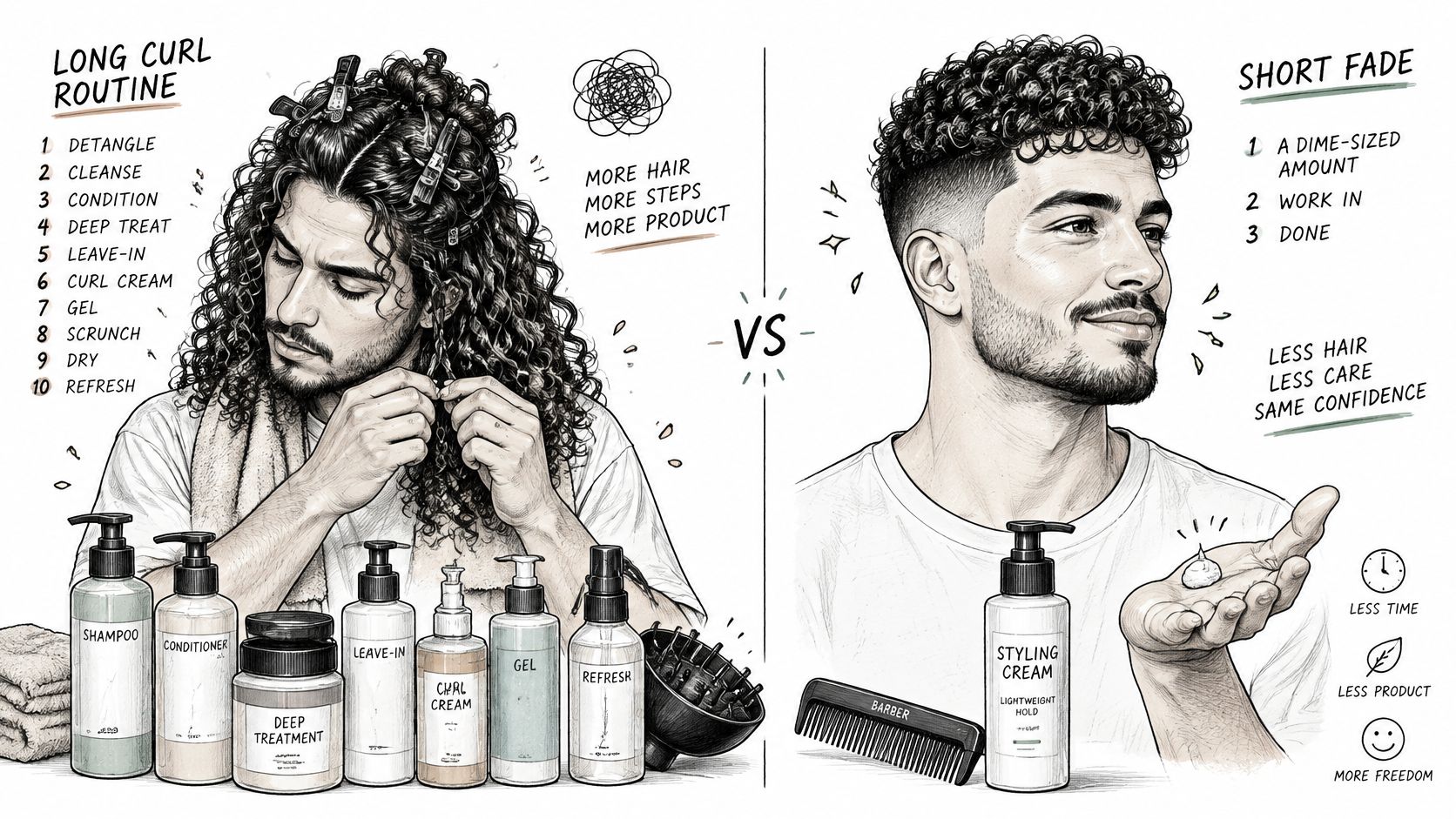
Long-curl tutorials often use heavy sectioning and several products. That can overload a short cut. Men's short curls, fades, and grow-outs need techniques built around their length and shape, rather than a long-hair routine applied to a smaller head. A review of care for short curls, fades, and grow-outs also cautions against assuming that less shampoo is always better: an observational study linked higher shampoo frequency with better reported scalp and hair condition, but it can't establish that washing caused the difference.
| Zone | Product | Amount | Application | Refresh |
|---|---|---|---|---|
| Fade under 3 cm | Light cream | Dime-sized | Rake from nape upward, then scrunch | Mist with water and scrunch; add leave-in only if dry |
| Short curls, 3–8 cm | Cream, not heavy gel | Nickel-sized | Scrunch with fingers | Water and a teaspoon of leave-in each morning |
| Grow-out, longer top | Cream | Palm-sized | Apply to the longer top and scrunch | Dampen the top and scrunch back into shape |
| Grow-out, sides and back | Cream | Less than the top | Use the least product where hair is shortest | Refresh with water and scrunch lightly |
For a fade, rake a dime-sized amount of light cream through the curls from the nape upward, then scrunch. Skip sectioning. The short length needs enough product to define the curl, but too much can make the top look greasy or flatten it.
Short curls benefit from a lighter hand, especially if they're low-density. Use a small amount of cream instead of a heavy gel, then refresh in the morning with water and a teaspoon of leave-in. During a grow-out, hair on top and hair at the sides won't behave alike: apply a palm-sized amount to the longer top, then use less on the shorter sides and back.
A fade exposes more scalp, so don't ignore cleansing when oil or sweat builds up. A satin or silk pillowcase can reduce overnight friction on short curls. Manage a grow-out by zones, not with one product dose for your whole head.
Fixing Frizz, Flat Curls and Buildup
Frizz by midday is often a sign that the ends need moisture or that styling products aren't being applied while the hair is damp. Start with the symptom you have, then change one thing rather than piling on products.
| Symptom | Likely cause | Fix |
|---|---|---|
| Frizz by midday | Dry ends and no leave-in | Apply leave-in to damp hair and seal with a few drops of oil |
| Flat, limp curls | Too little product for the density | Add a palm-sized amount of gel or cream to damp hair |
| Stiff, crunchy curls | Buildup from heavy gel | Use a moisturizing scalp wash, then reduce the product dose |
| Itchy or flaky scalp | Buildup or dry scalp | Cleanse the scalp more often and see a dermatologist if it persists |
| Fade loses shape within two days | Oily scalp or sweat | Wash sooner and switch to a lighter cream |
| Uneven curls during grow-out | Mixed textures across sections | Trim shaggy sections and apply cream to the shorter zones |
A leave-in or drying change can improve how curls feel on the next wash day. Buildup and product mismatch can take longer to sort out, so give a new wash pattern or lighter styler time before adding another product. For a product test, apply a small amount to damp hair and check the next day whether the shape held and frizz eased. This guide to why curly hair gets frizzy can help you narrow down the cause.
A barber can even out a grow-out when mixed lengths are the main problem. Product and wash adjustments won't correct an uneven shape, but they can improve how the different sections sit while you grow it out. Don't try to solve persistent itch, flakes, or hair loss by adding more cream or oil. Get persistent scalp or hair-loss problems checked by a dermatologist.
Start Your Routine This Week
Pick the row in the first table that matches your cut, then follow it for two weeks. Keep a note of wash days, products, workouts, and how your curls feel. The pattern matters more than a perfect routine on paper.
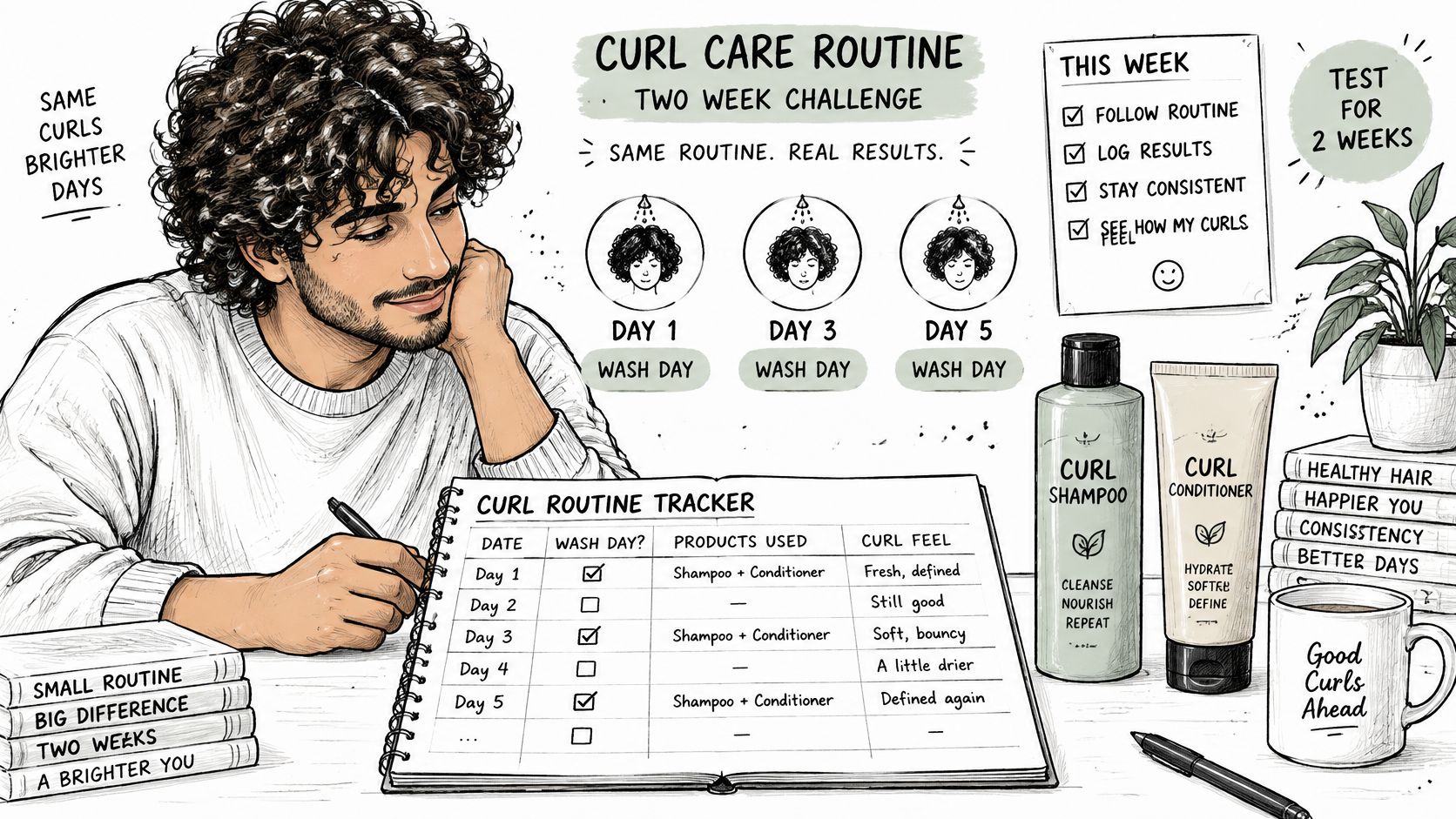
To test the wash-and-style technique, try washing on days one, three, and five, following the steps above and adding leave-in after each wash. Treat this as a short technique test, not a permanent schedule for every cut or scalp. Note frizz on day two and again by the weekend, then use those observations to decide whether you need more leave-in, a different wash cadence, or less styling product.
You can track those notes manually, or use Coil if you'd rather have help keeping them organized. Its onboarding quiz takes about two minutes and asks thirteen questions about curl pattern, porosity, density, scalp, chemical history, drying habits, and goals. Coil is made with women's curls in mind and also works for men, reading hair characteristics rather than gender; its routine reshapes around what you did, not what you meant to do.
The table and wash steps work on their own. Choose the routine that fits your cut, make one adjustment at a time, and use an app only if automatic tracking sounds easier than keeping your own log.
If you want a routine that adapts to your curl pattern, density, porosity, scalp, and real wash-day habits, visit Coil. Use it to track how your curls respond to your products and routine, then refine your approach without guessing.