Oily Hair Care Routine for Curly and Coily Hair
Build an oily hair care routine that keeps your scalp clean without drying out your curls. Learn smart wash-day strategies and ingredients that work.
You wash your hair, air-dry the curls, and by the time you've finished breakfast the roots already look slick while the ends feel thirsty. If you shampoo again, your lengths turn rough and frizzy. If you wait it out, the scalp feels heavy, itchy, or flat. That's the trap behind most oily curl routines, and the fix starts with separating scalp oil control from length care.
Table of Contents
- The Oily Curl Dilemma
- Why Your Scalp Drives the Oil Problem
- Your Wash Day Routine Step by Step
- Ingredients to Look For and Avoid
- Triage Sebum Buildup and Dermatitis
- Putting It All Together
The Oily Curl Dilemma
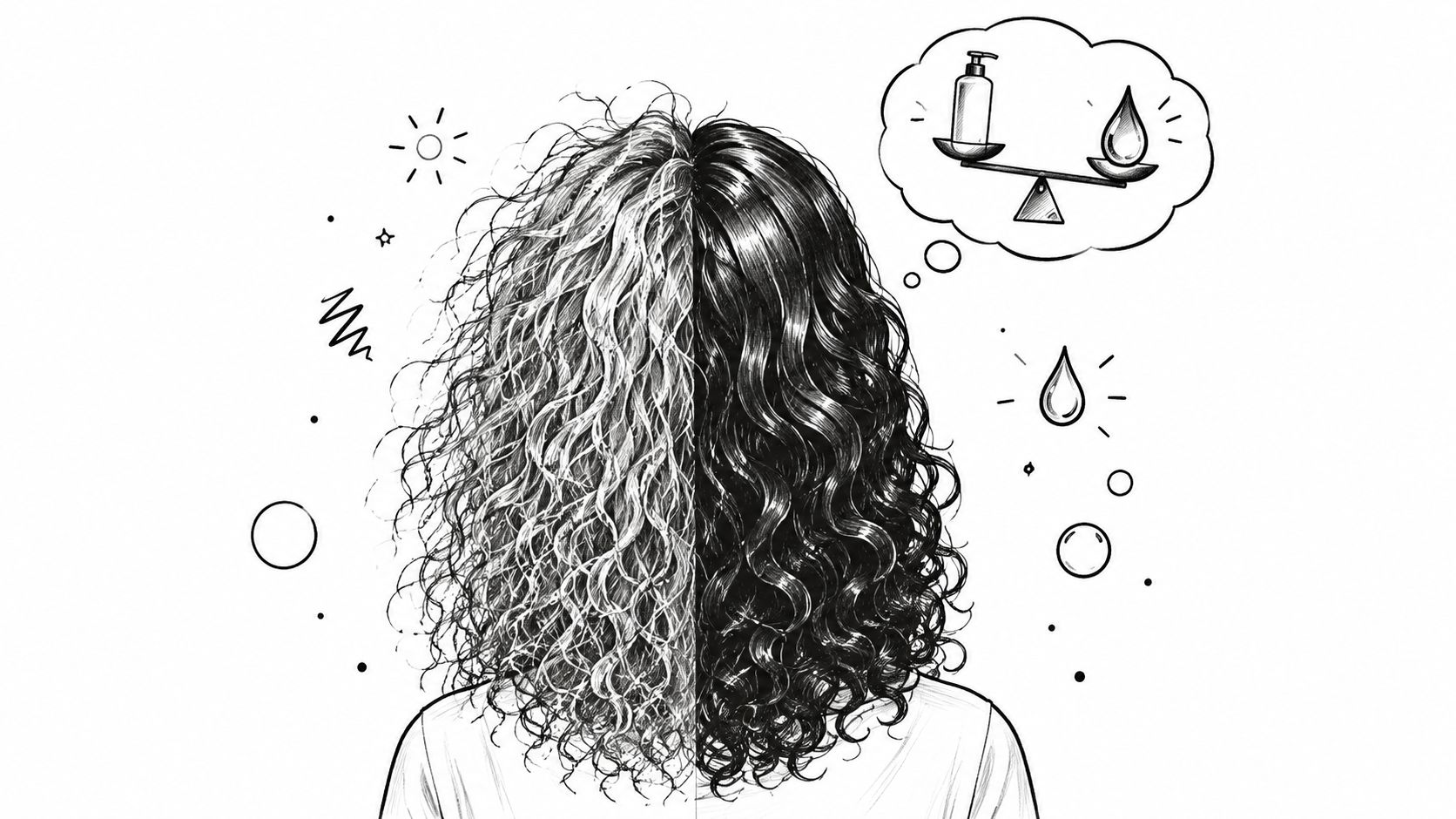
The mistake is treating every strand like it has the same job. Your scalp makes sebum, but textured hair doesn't always move that oil down the shaft the way straighter hair can. That means you can have an oily crown and dry mid-lengths at the same time, which is why one wash schedule rarely works for every head.
Coil's curl education team has a useful framing for this problem, and it lines up with what curl coaches see every day. Wash the scalp for the scalp's needs, then protect the curls for the curls' needs. Once you split those two jobs, the routine gets much easier to build.
Stop calling it one hair problem
An oily-hair care routine for curly or coily hair works best when you stop asking, “How do I fix my hair?” and start asking, “What does my scalp need, and what do my lengths need?” The answer is usually different for each zone. The scalp wants cleansing. The curls want slip, moisture, and gentle handling.
That's why blanket advice like “just wash less” or “just clarify more” keeps failing people. Some scalps really do need more frequent cleansing, while some curl patterns dry out fast if they're stripped too hard. The routine has to respect both truths at once.
Practical rule: if the roots feel greasy but the ends feel rough, don't change everything. Change where you cleanse, where you condition, and how hard you scrub.
The mental model that helps
Think of the scalp like skin and the lengths like fabric. Skin can get oily, irritated, or flaky. Fabric can get dry, stretched out, and rough if you keep forcing it through the wrong kind of wash cycle.
That model also helps with decision-making on wash day. If the issue is at the scalp, shampoo belongs there. If the issue is in the curl pattern, conditioner and gentler drying should do the heavy lifting. You don't need to punish the whole head just because one area needs attention.
Why Your Scalp Drives the Oil Problem
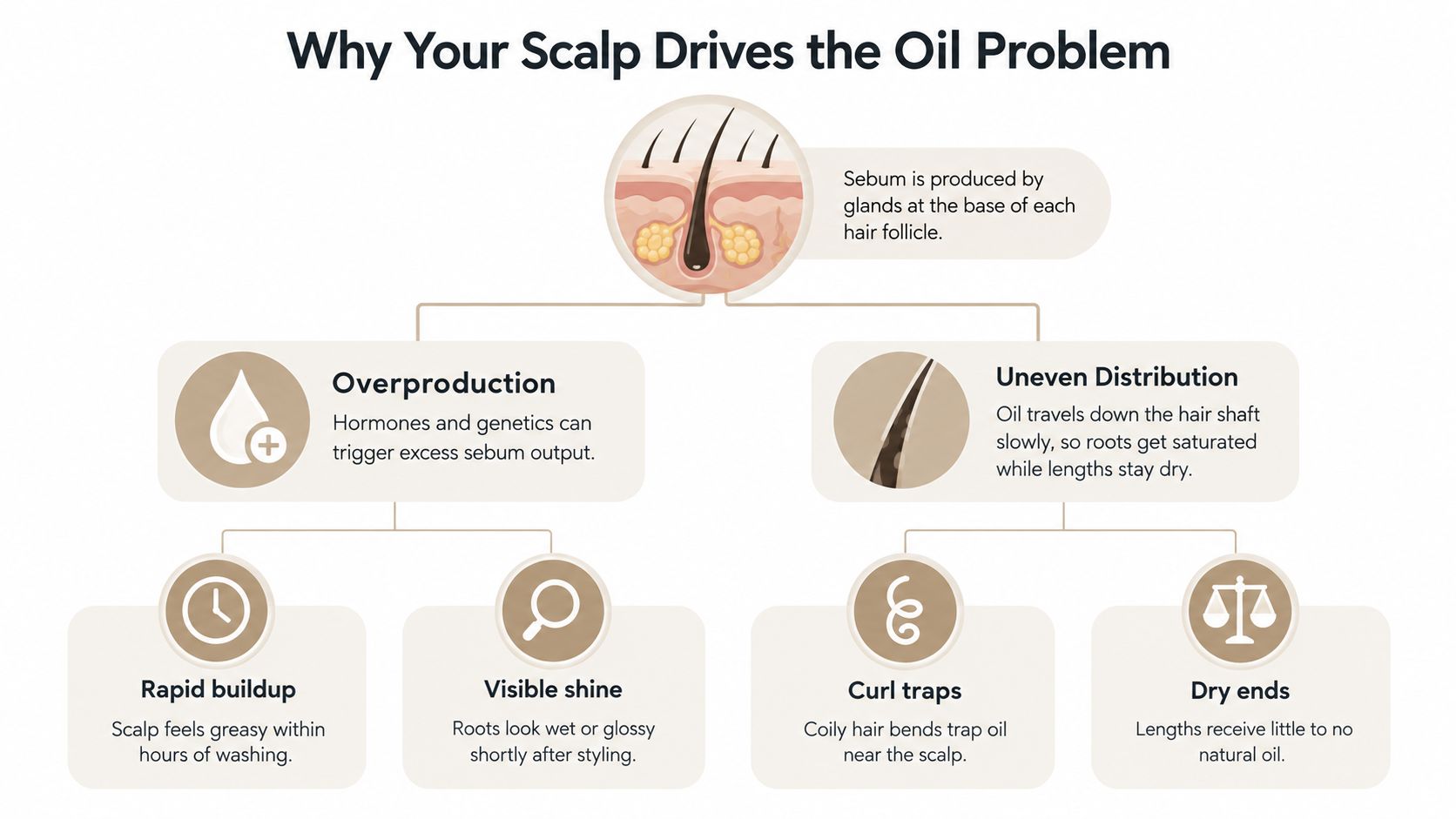
Sebum is produced in the scalp, not in the hair fiber itself. That changes the routine. In one controlled shampoo-frequency study, daily washing reduced total scalp-surface lipids and fatty acids, and it also reduced the amount of sebum measured on the hair. A later treatment phase with a mild scalp-care shampoo did not show a significant loss of internal hair lipids, even with more frequent washing PMC8138261.
Oil isn't spread evenly
A separate scalp study found that oil levels vary by location, with the mid-front scalp reaching the highest average sebum concentration at 163 micrograms per square centimeter in the participants studied Wiley study. The same research also reported higher sebum levels, lower hydration, and weaker barrier function on the scalp than on the frontal hairline and nape. That uneven pattern is why shampoo belongs on the scalp, not forced through the lengths.
The lather can rinse through the curls on its own. You do not need a whole-head scrubbing strategy to get the roots clean.
Your scalp has pores and a barrier. Your strands do not. Scrubbing the strands cleans nothing.
Why harsh cleansing backfires
The same controlled study suggests formulation matters. The mild cleanser did not measurably damage internal hair lipids, but that does not mean every shampoo behaves the same way. Harsh detergents and aggressive scrubbing can still leave curls feeling stripped, especially when the scalp is sensitive or the barrier is weaker.
That is the tradeoff. Clean the scalp enough to remove oil, then keep friction low so the lengths stay protected. For curly and coily hair, the safer routine is scalp-first, with the lengths getting only the runoff.
Your Wash Day Routine Step by Step
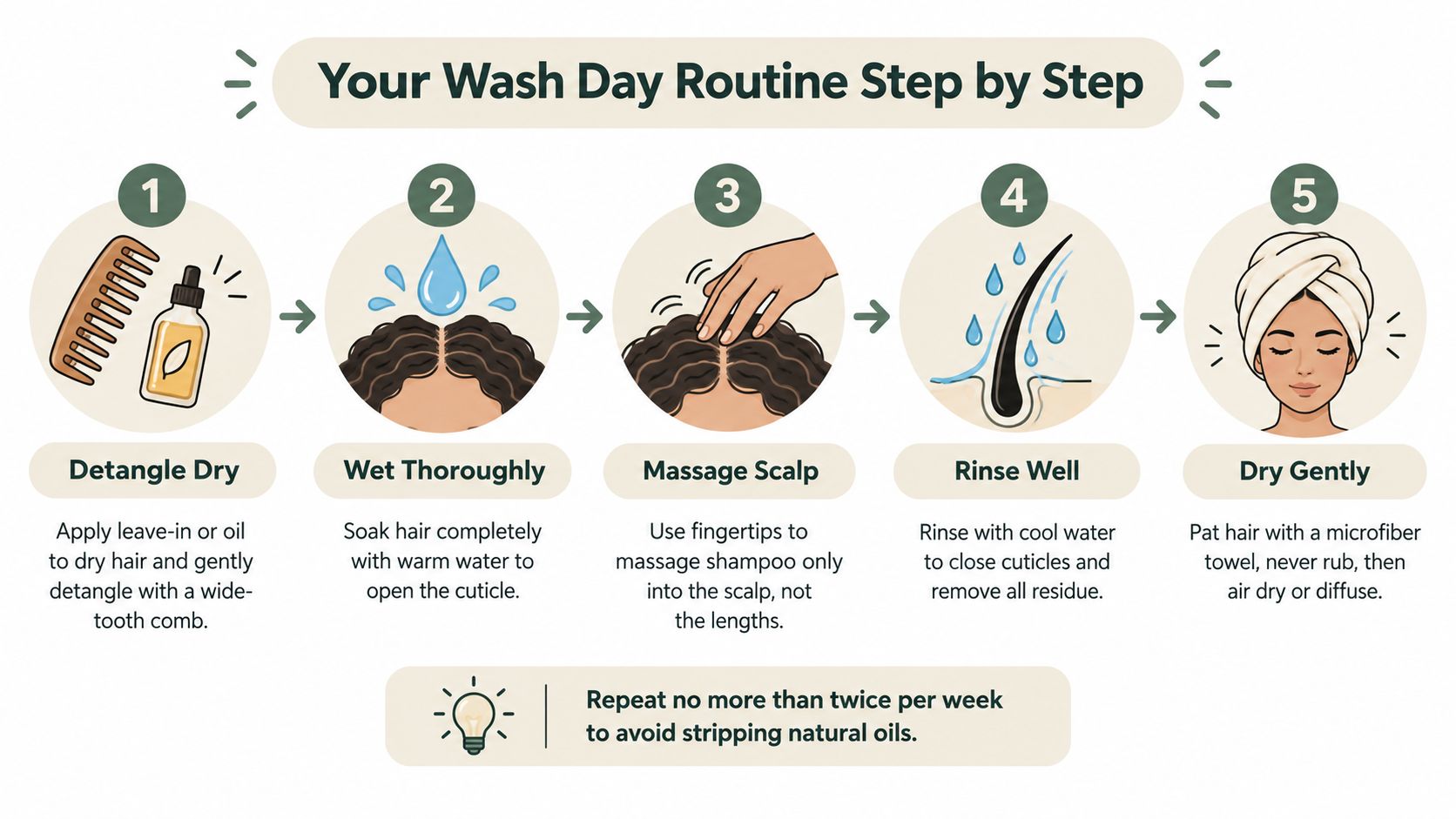
A solid wash day starts before water touches the head. If your curls tangle easily, detangle first on dry hair with a little slip from a leave-in or a light oil, then let the scalp take the cleanse. That protects the curl pattern from extra friction, which matters more as hair gets denser, coarser, or more coiled.
The low-porosity hair routine guide is a useful companion if your hair takes forever to dry. Low-porosity strands need less product buildup and a cleaner rinse path, or the wash day can feel endless.
A simple sequence that works
- Detangle dry. Work in small sections and stop at the first knot instead of yanking through it.
- Wet thoroughly. Saturate the hair so the shampoo can move easily.
- Cleanse the scalp. Massage shampoo with your fingertips, not your nails, and keep the focus on the roots.
- Condition the lengths. Keep conditioner off the scalp and let it sit where the curls need slip.
- Dry gently. Blot with a microfiber towel or T-shirt, then air-dry or diffuse without rough rubbing.
Fine 2C waves usually need less product and shorter drying time. Dense 4C coils often need more sectioning and more patience during conditioning, because the water and product have farther to travel. Short curls and fades can skip the heavy mid-length steps, but they still need a careful scalp cleanse.
When wash day needs adjusting
Workout days, humid weather, and heavy styling products all push the routine in different directions. Sweat and humidity can make roots feel flatter sooner, while dry climates can make the ends protest if you cleanse too aggressively. The fix isn't a brand-new routine every week, it's a small adjustment in frequency, product load, or drying method.
Useful shortcut: if the scalp is dirty, cleanse the scalp. If the curls are dry, condition the curls. Don't solve one problem by creating another.
Ingredients to Look For and Avoid
A product label can look intimidating, but the decisions are usually simpler than the packaging makes them seem. For an oily scalp with curls, you want cleansers that remove oil without turning the lengths into straw, and you want styling ingredients that don't cling so hard they leave the roots dull or coated.
What helps, what weighs down
| Ingredient Quick Reference for Oily Curls | Better for Oily Scalp + Curls | Use With Caution |
|---|---|---|
| Cleansers | Gentle sulfate cleansers, mild scalp shampoos | Very harsh detergents that leave the scalp tight |
| Conditioners | Lightweight, rinse-friendly formulas on mid-lengths and ends | Heavy creams applied near the roots |
| Silicones | Lighter, rinseable silicones away from the scalp | Heavy coating agents that can build up |
| Alcohols | Small amounts in fast-drying stylers | Drying alcohols high on the ingredient list |
| Butters and waxes | Used sparingly on ends that need sealing | Rich butters, waxes, and pomades near the scalp |
| Proteins | Occasional support for weak curls | Too much protein when the hair already feels stiff |
Read the label with your curl pattern in mind
Not every silicone is the enemy, and not every oil-heavy formula is a disaster. The issue is placement and buildup. A low-porosity coil might tolerate a more coating conditioner on the ends, while a fine wave can get limp fast if the same product touches the crown.
The same goes for heavy creams and pomades. They can be useful on dry ends, but they're a poor match for an oily root area. If a product makes the scalp feel flat, greasy, or coated within a day, it belongs farther from the roots or not in the routine at all.
Quick filter: if an ingredient is great at sealing moisture, ask where you actually need sealing. The scalp usually isn't that place.
Triage Sebum Buildup and Dermatitis
A scalp that looks oily is not always a dirty scalp. Sometimes the shine comes from sebum. Sometimes it comes from product buildup. Sometimes the pattern points to seborrheic dermatitis, especially when the scalp stays itchy, red, or covered in greasy scale that keeps returning. If all three are treated with the same shampoo, irritation often gets worse instead of better.
The key is to read the scalp first, then match the response. Sebum needs regular cleansing. Buildup needs a reset that clears residue. Dermatitis needs a more specific treatment plan, not more scrubbing.
Read the symptom pattern
- Classic oiliness feels heavy, shiny, or flat soon after washing.
- Product buildup often leaves curls limp, coated, or waxy, even when the scalp does not feel especially inflamed.
- Seborrheic dermatitis usually brings persistent itch, redness, greasy scale, and fast recurrence.
That last pattern calls for more than a cosmetic fix. Evidence-based management supports antifungal shampoos as short-term first-line options, and a randomized, double-blind study with 949 patients found that 1% ciclopirox shampoo used once or twice weekly for four weeks was superior to vehicle, while once-weekly or every-other-week maintenance reduced relapse PMC3579488. Use the contact time listed on the label, rinse thoroughly, and avoid stacking multiple medicated actives at once.
What to skip
Co-washing gets attention, but it is not a universal answer for an oily scalp. The same review found no scientific proof that co-washing restores sebum balance, and oily roots can feel weighed down if that is the only cleansing method used. Dry shampoo can help between washes, but it is a bridge, not a replacement for real cleansing.
If symptoms spread beyond the scalp, or if there is significant inflammation or hair shedding, stop experimenting and get medical input. A scalp that keeps relapsing is asking for diagnosis, not a stronger styling routine.
Putting It All Together
A routine that works for oily curls is usually boring in the best way. You cleanse the scalp often enough to keep oil, odor, itch, and limp roots under control, and you keep the lengths protected so they don't turn brittle. The schedule changes with your pattern, your climate, your styling habits, and how fast your scalp gets greasy.
Coil's homepage is a good place to explore personalized curl education if you like routines that adapt instead of staying fixed. The bigger lesson here is simple, though. Don't let one oily area override the needs of the whole head.
A quick decision check
Before you add a new product, ask yourself:
- Is the issue on the scalp or in the lengths?
- Does it smell like oil, feel like buildup, or look like flaky inflammation?
- Did the last product make the roots flatter or the ends drier?
- Am I cleansing too harshly or not thoroughly enough?
- Do the symptoms keep coming back after a normal wash cycle?
If the scalp still feels clean, soft, and calm a day or two after washing, you can usually stretch the routine. If the roots get sweaty, itchy, or visibly greasy sooner, wash sooner. If flakes, redness, or shedding show up, stop guessing and get it checked.
The best oily hair care routine is the one that listens to the scalp without forgetting the curl pattern.
If you want a routine that separates scalp needs from curl needs, Coil can help you build that structure into everyday wash days. It's designed for wavy, curly, and coily hair that doesn't fit a one-size-fits-all plan, and it can guide you toward better product choices and more consistent results. Visit Coil to start shaping a routine that actually matches your scalp and your curls.
Prepared with the Outrank app